The main broadcast of an esports tournament is built to present the match as clearly and entertainingly as possible. Observers select the most important action, commentators explain events in real time, and the production team adds scoreboards, replays, player cameras, statistics, and audience shots. That format works well for following the result, but it cannot show every player’s screen, every communication decision, or every movement taking place across the map. Player point-of-view feeds, approved team-communication recordings, replay analysis, and tournament rulebooks can provide additional context. These sources should not be treated as interchangeable. Availability differs by game, event, region, and broadcast platform. Team communications are also commonly released as edited recordings rather than unrestricted live audio.
What the Main Coverage Misses and the Reality on the Player's Screen (Player Feeds)
Virtual Vision on Broadcast vs. The Narrow Reality on Player Screens
A spectator feed often contains information that an active player cannot see. In Counter-Strike broadcasts, for example, observers may use X-ray outlines to show players through walls. Tournament broadcasts can also display both teams on an expanded minimap, making rotations and defensive setups easier for viewers to understand.
The competing player sees only the information permitted by the game. Smoke blocks sightlines, flashes disrupt vision, and enemies outside the player’s field of view remain hidden. The player must make decisions using visible information, sound, team callouts, timing, previous enemy behavior, and knowledge of the map.
A player POV can therefore explain why an action that looked obvious on the main broadcast was difficult in practice. It may reveal that the player was watching another angle, had limited utility, was partially blinded, received late information, or had to choose between several possible threats.
Official POV products have existed in esports, including Riot’s Pro View service, which provided a reproduction of a professional League of Legends player’s screen. However, dedicated POV feeds are not available for every tournament and should not be assumed to be part of every broadcast.
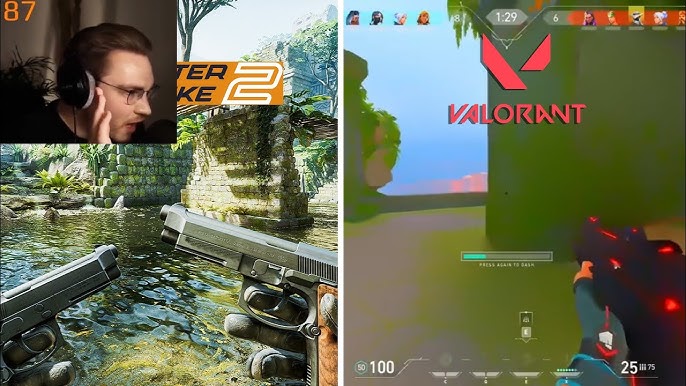
Raw Emotion and Physical Stress via Individual Cameras (Player Feeds)
A player POV feed and a player camera serve different purposes. The POV shows the game from the competitor’s screen, while the camera shows facial expressions, posture, hand movements, and reactions at the desk.
The main broadcast usually shows these cameras for selected moments, such as a clutch victory, a tactical timeout, or the end of a map. A longer player-camera recording may provide more context about how the competitor responds to pressure, communicates between rounds, or resets after a mistake.
Viewers should avoid diagnosing exhaustion, injury, anger, or psychological distress from body language alone. A player looking down may be checking equipment, waiting for an official, or concentrating on communication. The camera can document a reaction, but it does not always explain its cause.
It may also show equipment preferences such as keyboard placement, mouse grip, monitor distance, or the use of hand warmers. These are personal choices rather than universal techniques that every player should copy. Tournament organizers may also control which equipment and software players are permitted to use. VCT rules, for example, require players to use tournament-provided PCs, monitors, headsets, and microphones at LAN events.
Decoding Internal Communication: What Do Players Say When the Main Mic Is Off?
5 Hidden Types of In-Game Voice Communications
There is no official five-part system that applies to every esports title. Nevertheless, released communication recordings often contain several recurring types of information:
Tactical calls: Instructions to attack, defend, rotate, slow down, retake, save resources, or change an earlier plan.
Information calls: Enemy positions, ability use, visible equipment, damage dealt, missing opponents, and changes in map control.
Timing and resource calls: Updates about cooldowns, ammunition, utility, economy, objectives, respawn timers, or when teammates can support an action.
Coordination calls: Short instructions that establish who enters first, who trades, who watches a flank, who uses utility, or who controls a specific area.
Team-management calls: Encouragement, reminders to remain calm, corrections after a mistake, and attempts to keep communication clear during a difficult round.
These categories are practical descriptions, not a scientific or tournament-approved classification. Communication also differs sharply between tactical shooters, MOBAs, battle royales, and fighting games. The communication system itself depends on the tournament. VCT’s 2026 rules state that its native headset system provides voice chat and that third-party software such as Discord requires prior approval. BLAST rules refer to controlled TeamSpeak access and the recording of team communications. It is therefore inaccurate to assume that professional teams freely choose between Discord, TeamSpeak, and in-game voice during official matches.
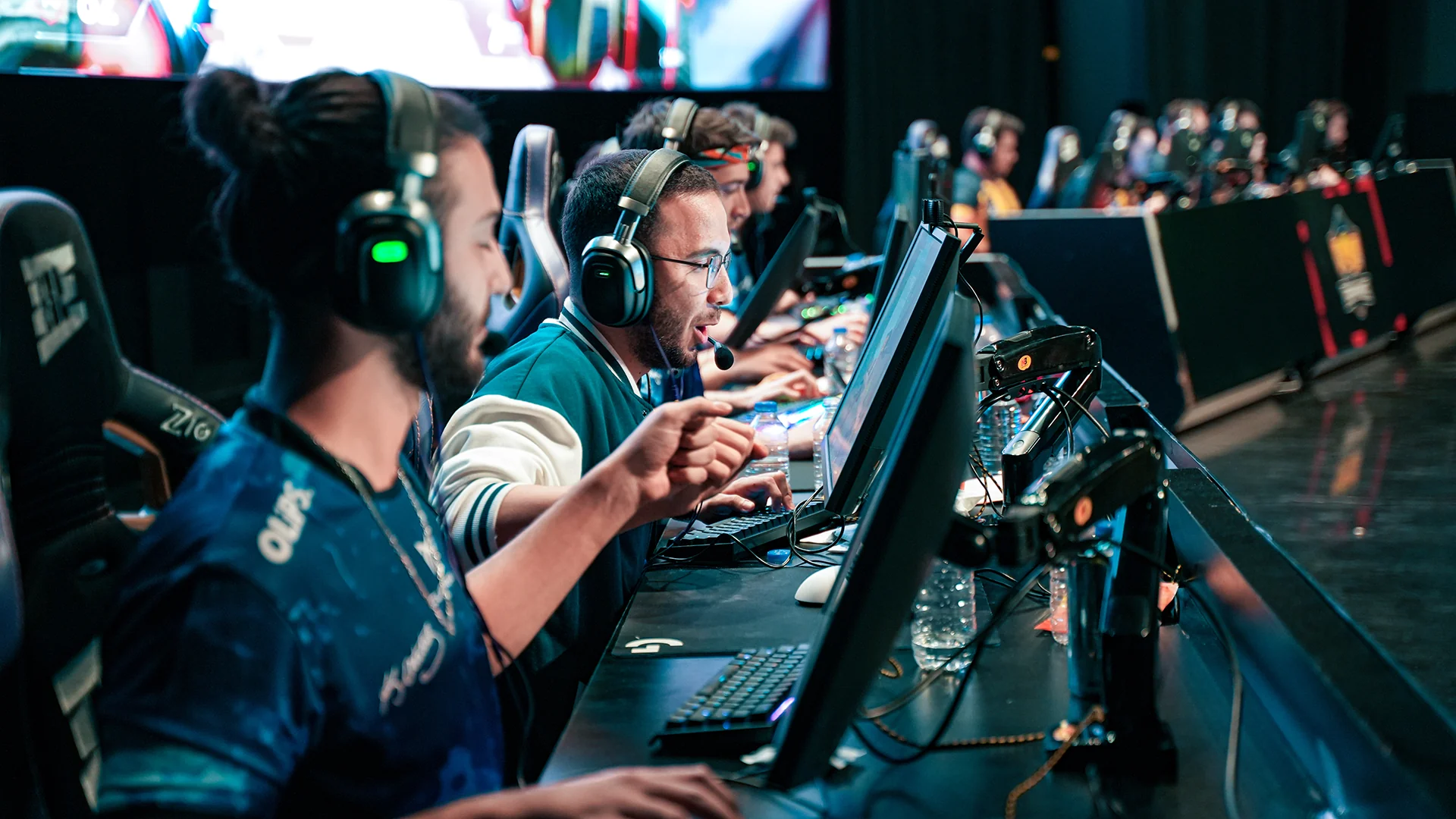
Critical Information from Eliminated Players (Dead Player Callouts)
An eliminated player may still contribute through communication, depending on the game and tournament rules. The player can report what was seen before elimination, where an opponent moved, which abilities were used, or what information appeared in the game’s combat report.
There is no universal rule requiring this callout to be completed within two seconds. Nor does every game provide the same post-death information. The useful communication may be a single location call, a damage report, a warning about a flank, or a reminder about an opponent’s remaining resources.
Clear post-death communication can help surviving teammates prepare a trade, avoid repeating the same mistake, or reconstruct the enemy’s setup. Poor communication can have the opposite effect if the eliminated player continues talking over active teammates or makes claims that were not actually confirmed.
Analysis Desk: Dissecting "Invisible" Tactics and Advanced Metrics
Advanced Metrics That Live Coverage Can't Show in Time
Kills, deaths, and assists provide only a partial account of performance. A player may create significant value through damage, utility, vision, trading, objective control, or space creation without finishing many eliminations. Useful statistics depend on the game. Counter-Strike analysis may include average damage per round, KAST, opening duels, flash assists, clutch wins, trading, and economy-adjusted performance. ADR means average damage per round; it should not be confused with a player-rating value. HLTV’s rating systems combine several performance components rather than relying on a fixed ADR benchmark.
VALORANT coverage may examine average combat score, first kills and deaths, assists, survival, trading, and agent-specific utility. League of Legends analysis can include gold differences, objective control, vision, damage distribution, lane states, and item timings. No single statistic proves that a player performed well. Analysts must consider role, economy, opponent quality, map side, team strategy, and the situations in which the actions occurred.
Interactive Tactical Dissection Technology
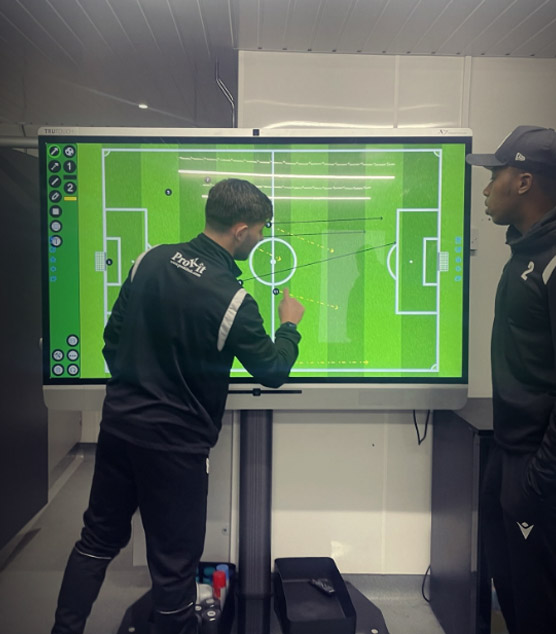
Post-round and post-match analysis has more time than live commentary to reconstruct a play. Analysts may use replay controls, overhead maps, slow motion, annotations, or telestrator-style drawing tools to show movement and timing.
These breakdowns can reveal how one player’s utility forced an opponent out of position, how a false attack created space elsewhere, or how a team used earlier information to predict a rotation. Riot’s Replay API, for example, supports camera control, seeking through game time, playback adjustment, and changes to replay-rendering properties.
The analysis is still an interpretation. Unless team communications or player interviews confirm the intention, an analyst may be reconstructing the most likely explanation rather than reporting exactly what the team planned.
The Off-Season Dark Horse: The Truth Behind Roster Leaks and Player Frustrations
Exploding Insider Leaks Backed by Empirical Data
A 2024 peer-reviewed study examined 26,278 pieces of CS information collected from HLTV and the Perfect World Esports app between 2013 and the first half of 2023. The dataset included match news, professional information, and transfer information rather than 26,278 roster leaks alone.
The researchers found that transfer coverage became especially prominent during off-season periods. Transfer-related comments reached 12,974 in 2018 and 51,349 during the first half of 2023. These figures describe engagement within the platforms and period studied. They should not be presented as worldwide esports audience totals or proof that all esports experience the same pattern.
Global Superstars Reacting to Transfer Leaks
The same study documented negative reactions from Counter-Strike players including Twistzz, NiKo, JW, dupreeh, and KaiR0N- concerning the handling of transfer information by parts of the esports media.
A report about a possible transfer should not be treated as a completed deal. Readers should distinguish among an anonymous rumor, an attributed insider report, a player statement, and an official announcement from the team or tournament.
Leaks may reveal possible negotiations or roster plans, but they can also be incomplete, outdated, or wrong. The final roster should be considered verified only after confirmation from the player, organization, league, or another directly responsible party.
The Observer's Perspective and Hidden Technical Rules
The Art of Observer Coordination
The observer determines which in-game perspective reaches the main broadcast. That work involves following developing action, anticipating contact, coordinating replays, and avoiding unnecessary camera changes that make the match difficult to follow.
Broadcast production may involve several operators rather than one person independently controlling every camera. Riot has described a production system in which camera signals, in-game observer feeds, audio sources, and replays are transported to control rooms and combined into the final program.
A missed elimination does not necessarily mean the observer lacked game knowledge. Several important events may occur simultaneously, and the main feed can show only one perspective at a time. Replays, secondary streams, and post-match analysis help recover action that the live director could not present immediately.
Strict Ban on Tactical Discussions During Technical Timeouts
Technical and tactical pauses are not the same. A tactical timeout exists to allow strategic communication under the conditions established by the tournament. A technical pause is used to address equipment, software, server, audio, or connection problems. Current rules from both VCT and BLAST prohibit player and coach communication during technical pauses unless tournament officials authorize it. VCT also requires players to keep their headsets on and prohibits them from controlling their agents during the pause.
The original claim about automatic prize deductions or map forfeits was too broad. BLAST’s 2026 handbook states that a first infringement may receive a warning, while repeated breaches can result in stronger sanctions such as penalty points or fines. VCT gives officials authority to impose disciplinary action, but the exact penalty depends on the applicable rules and circumstances. Viewers should therefore consult the rulebook for the specific game and event rather than assuming that every organizer applies an identical pause policy.
The main broadcast remains the best way to follow an esports match from beginning to end. It organizes complex action into a watchable program and provides the score, commentary, replays, statistics, interviews, and selected player reactions. Player POV feeds show the limited information available to an individual competitor. Player cameras provide visual reactions but do not reveal the cause of every emotion. Released team communications demonstrate how players exchange information and coordinate decisions. Analysis segments explain patterns that cannot be covered fully during live play, while rulebooks clarify what teams may do during pauses and other controlled periods. During a future tournament, viewers can combine the main broadcast with an official player POV when one is available. When separate live feeds are not offered, post-match communication videos, replay analysis, official statistics, and tournament rules provide a more reliable alternative than unofficial leaks or unsourced tactical claims.